
Caddo Parish Sex Offender Checks
The Louisiana State Sex Offender and Child Predator Registry is the main source for a Caddo Parish check. The Louisiana Bureau of Criminal Identification and Information, part of State Police, maintains it under state law. Searchers can use identity or geographic details, then open a public profile for the registration facts that the law permits the system to show.
The Caddo Parish Sheriff's role is different. A person with a registration duty reports through the sheriff of residence and any other jurisdiction required by law. Contact the sheriff before appearing to confirm the correct office, appointment process, documents, and current fees. The research did not locate a reliable public source for a specific Caddo registration counter schedule or local fee, so those details should be confirmed directly. Registry data may change after a move, verification, correction, court action, or enforcement update.
Caddo Registry Warning Gate
The Louisiana registry presents a conditions-of-use warning before search access. Read it and select the agreement control only when the planned use is lawful. The warning addresses both accuracy limits and misuse. It matters because a database record can lag behind a recent address change or other agency update, while an apparent match may concern someone else with a similar name.
Accepting the warning is not a finding about any listed person. It is the entry point to an official public-information service. Match several identifiers, check the update and verification details on the profile, and contact the responsible agency when a fact seems stale. Do not treat a screenshot as permanent proof of a person's current home, work, school, or compliance status.
Louisiana Registry Searches
The state registry supports more than a surname query. A user may search by name or use location fields such as address, city, ZIP code, parish, and radius. Select Caddo for parish-wide results when that control is available. Exact radius options belong to the live vendor interface and should not be guessed from the statute.
- Open the official Louisiana registry, read its accuracy and lawful-use warning, and accept the conditions.
- Choose a name search or enter an address, city, ZIP code, parish, and radius suited to the safety question.
- Review the list or map and compare the name, photo, physical description, and location before choosing a profile.
- Open the full profile, read the offense and registration fields, note the update status, and report suspected errors through an official channel.
| Field Label | Type | Required | Notes |
|---|---|---|---|
| First Name | Text | No | Used with a name search; check aliases and spelling |
| Last Name | Text | Name route | Surname is the core identity field |
| Address | Text | Address route | Supports an address-proximity search |
| City / ZIP Code | Text or select | No | Limits results to a Louisiana place or five-digit ZIP |
| Parish / County | Dropdown | No | Select Caddo for parish-wide results |
| Radius | Dropdown | Address route | Confirm current distance options in the live interface |
| Map / List | View controls | No | Switches the geographic or result-list view when offered |
| Email Notification | Signup | No | Supports radius- or ZIP-based notice under state law |
Caddo Registry and NSOPW
Louisiana's registry is the primary place for state-specific registration facts. The National Sex Offender Public Website adds a cross-state search when the question extends beyond Louisiana.
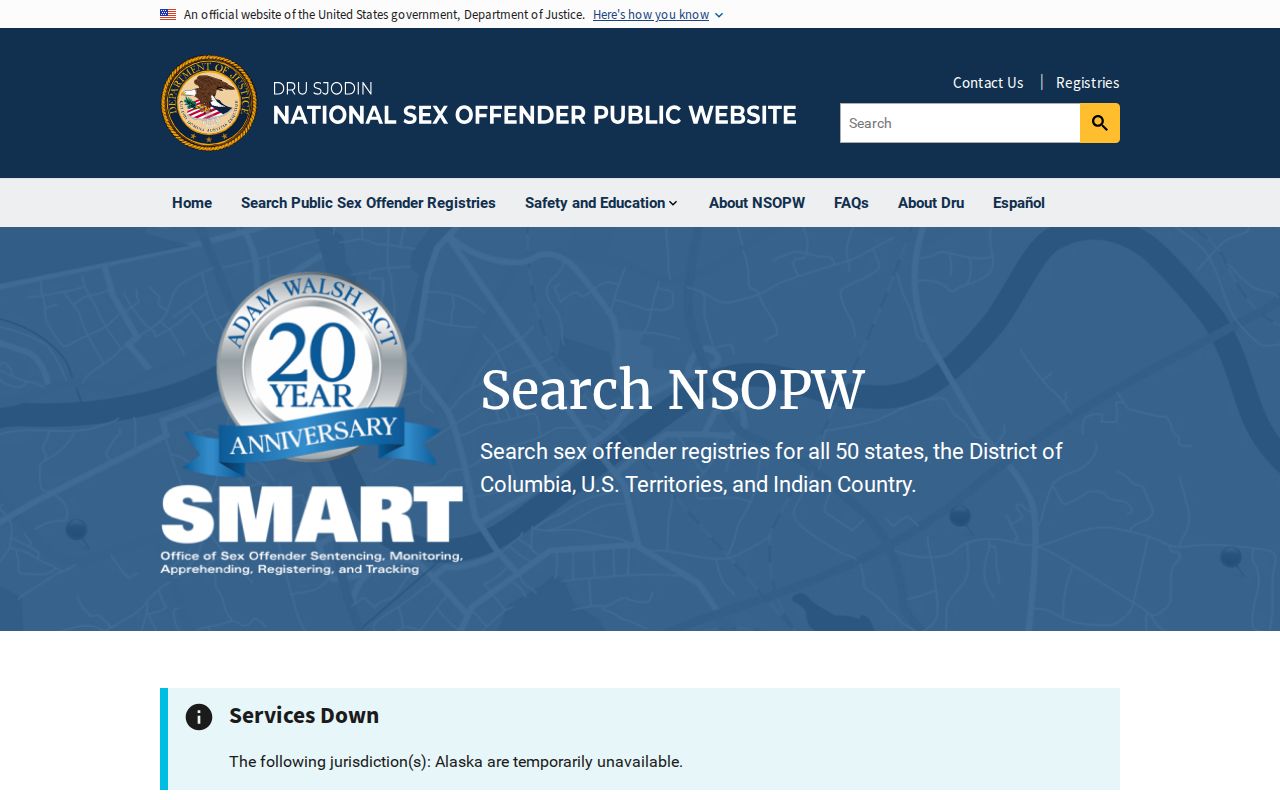
The national layer is useful for a person who may have lived in another state, but it does not replace Louisiana's full profile or the local agency responsible for Caddo registration. Search both when geography is uncertain. If the two sources differ, compare update dates and ask the responsible registry agency to resolve the discrepancy.
Note: A national result expands geographic coverage, while Louisiana's registry supplies the controlling state fields and local responsible-agency details.
Registry Profiles: What They Show
Public Caddo Parish profiles combine identity, offense, location, and registration fields. They can show enough detail to distinguish people and understand the basis and status of registration. State law deliberately keeps other information private. Social Security numbers and victims' names are excluded, as are arrests that did not result in conviction, travel or immigration documents, and public display of telephone numbers, email addresses, and online identities.
| Name & Aliases | Public name variants used to help distinguish an identity |
|---|---|
| Photo & Physical Description | Current or prior photos, age or birth data, sex, race, height, weight, hair, eyes, and visible marks when published |
| Registered Address | Residence and possible work, school, or public-location information as law permits, with map context |
| Offense & Statute | Jurisdiction, offense description or citation, conviction date, and registration basis; victim age category may appear |
| Level / Tier | The Louisiana statutory registration category and required duration, not merely a generic federal label |
| Registration Status | Compliance or status information, responsible agency, registration dates, last verification or update, and required duration |
| Other Identifiers | Scars, marks, tattoos, vehicles, plates, and descriptions when public |
The system may allow a yes-or-no linkage query for an electronic identifier without publicly naming a registrant. That narrow check is different from displaying the protected email or account itself.
Protected Caddo Registry Details
Louisiana Revised Statutes 15:542.1.5 governs public registry content, search functions, alerts, and exclusions.
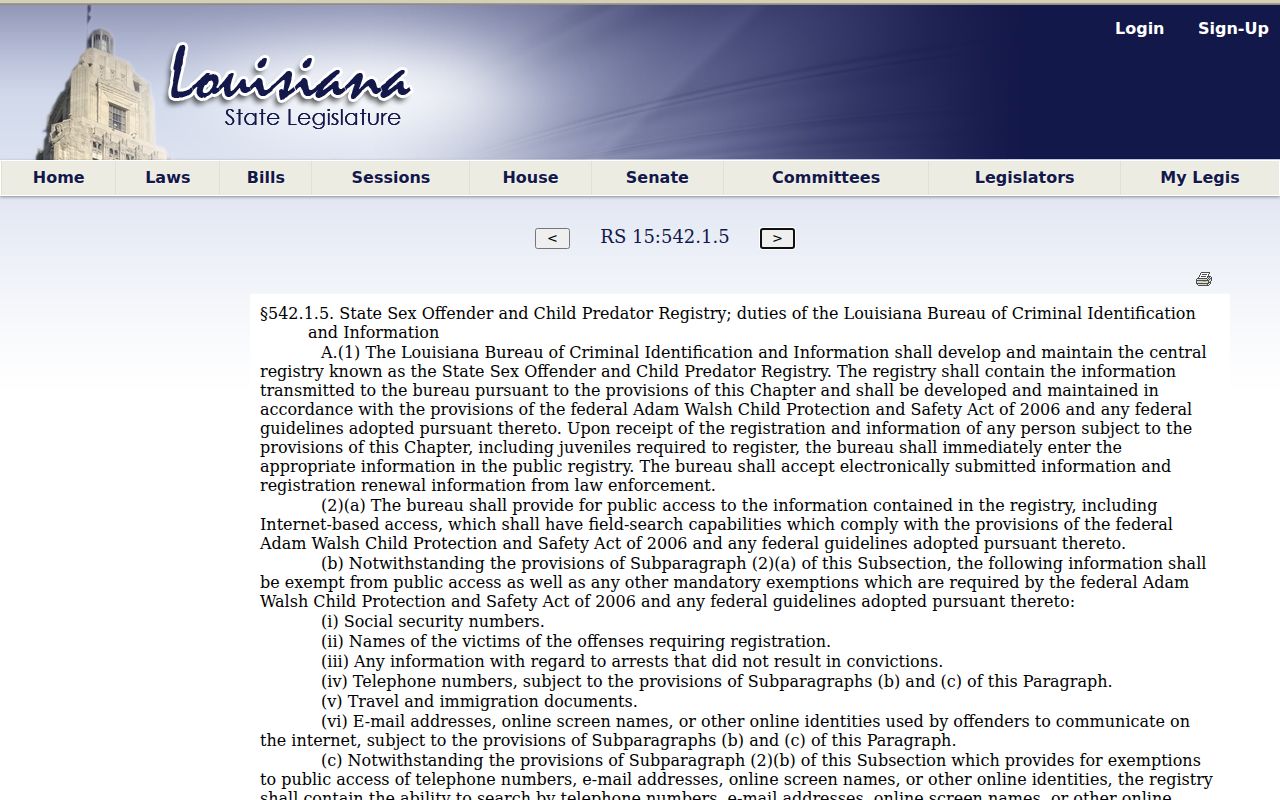
The statute explains why a public profile is detailed but not an open dossier. A missing field may be legally withheld rather than overlooked. Victim names, Social Security numbers, nonconviction arrests, and the protected contact identifiers listed in the law do not belong in a public result.
Use public fields to confirm the right person and registration information. Do not try to uncover excluded data, contact a victim, or publish private facts drawn from another source. If a safety concern depends on protected information, give the facts to law enforcement so the agency can assess them under its lawful authority.
Registration Levels and Duties in Louisiana
Louisiana duration rules come from the offense and statutory category. They should not be reduced to generic Tier I, II, and III labels without reading the state offense and duration provisions. Baseline qualifying registration generally lasts 15 years. A qualifying person may seek a court reduction to 10 years after meeting the clean-record and treatment conditions. Sexual offenses against a minor generally carry 25 years, while enumerated aggravated, repeat, and other lifetime categories remain for life.
The State Police registry offense resource organizes the Louisiana offenses and related categories.
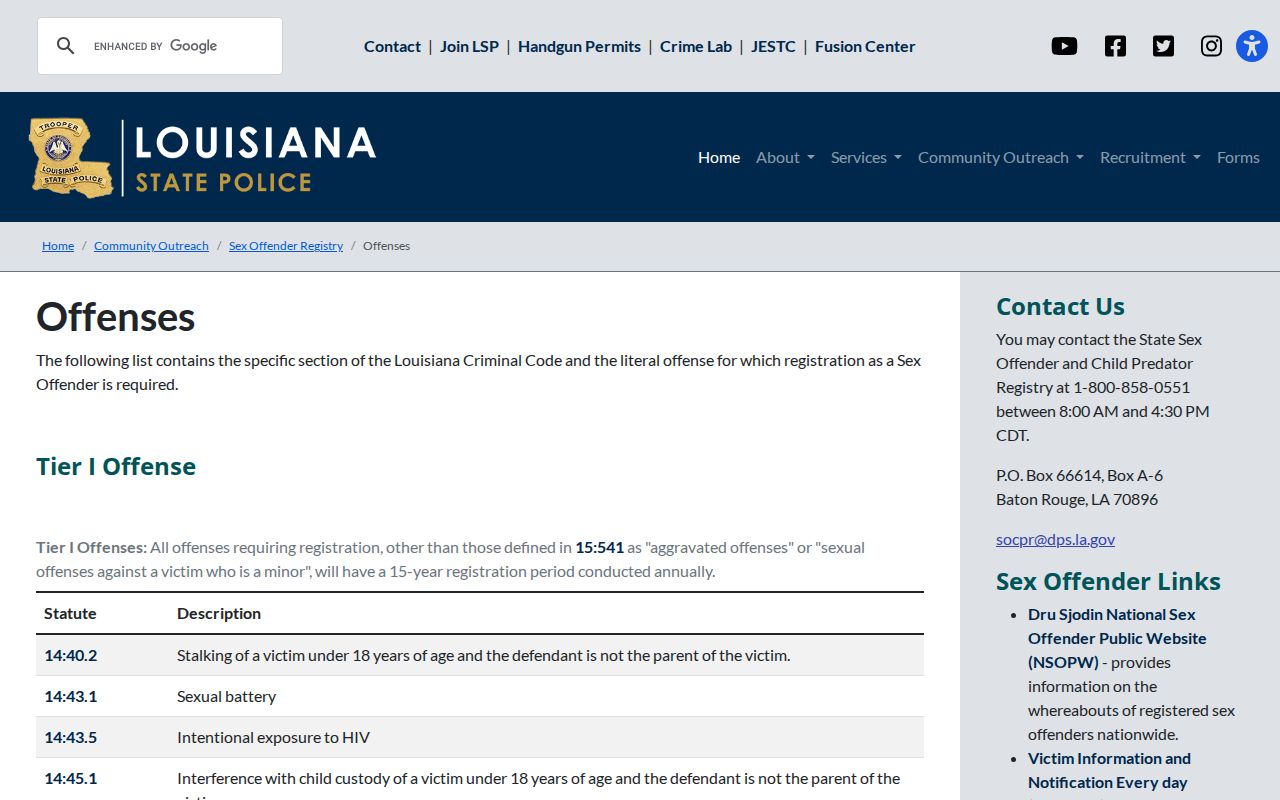
The offense resource helps connect a profile's conviction basis with the state duty. Verification timing can be annual, semiannual, or quarterly depending on the applicable category and law. Confirm the profile and the statute rather than assigning a schedule from an informal tier chart.
| Louisiana Category | Duration | Verification Pattern |
|---|---|---|
| Baseline qualifying registration | 15 years; qualifying court reduction to 10 may be available | Annual when the applicable category requires annual verification |
| Sexual offense against a minor category | 25 years, subject to statutory details | Semiannual when the applicable category requires twice-yearly verification |
| Aggravated, repeat, and enumerated lifetime categories | Lifetime | Quarterly when the applicable category requires four verifications per year |
| Qualifying juvenile lifetime category | Possible reduction to 25 years by motion after statutory clean-record and treatment conditions | Confirm the current duty with the registering sheriff |
Caddo Registration Terms and Updates
Louisiana Revised Statutes 15:544 states the registration durations and the limited reduction paths.
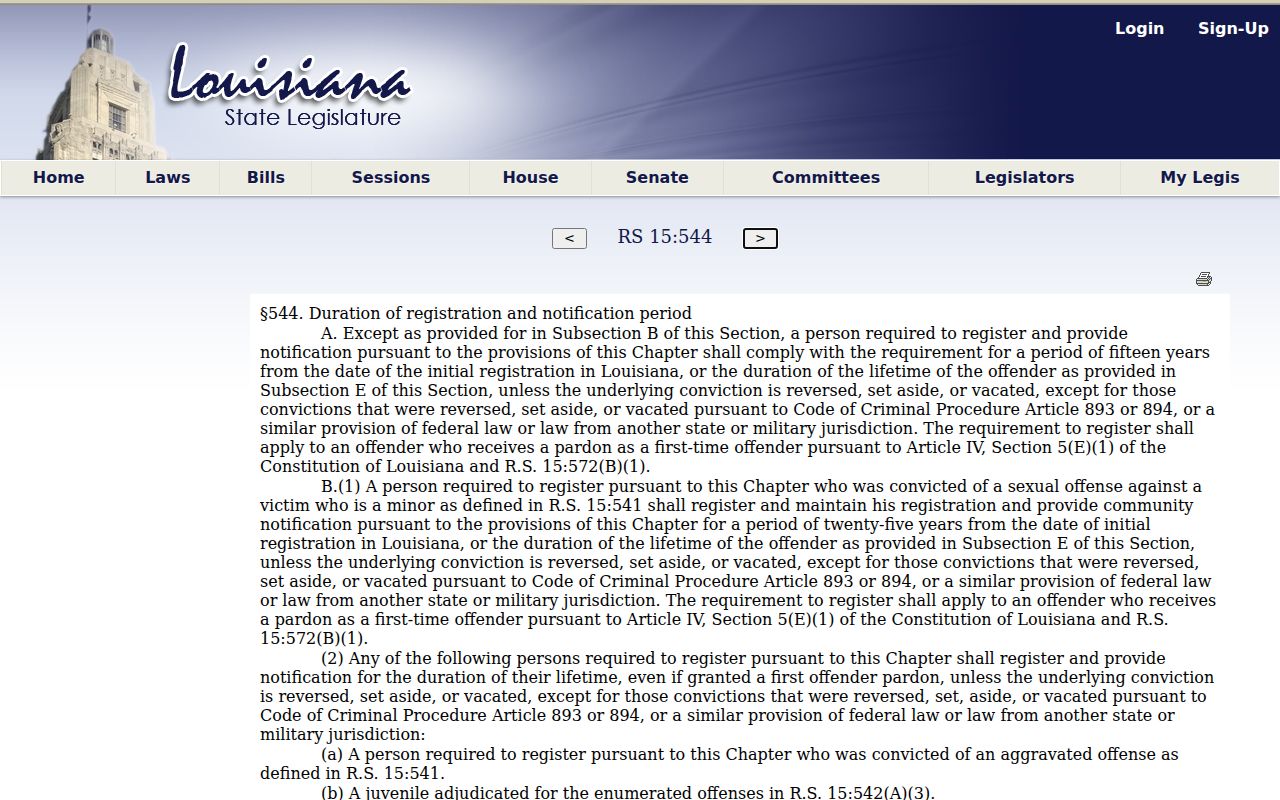
The duration statute makes two points clear. A 15-year term does not shrink to 10 automatically, and a qualifying juvenile lifetime duty does not become 25 years without the required motion and conditions. A court must address the relief allowed by law.
Louisiana law also addresses prompt updates and an annual registration fee, documented in the research as $60 under R.S. 15:542.1.1. A registrant should confirm the current amount and the correct Caddo process before payment. Changes that trigger a three-day update duty can affect the public profile soon after the agency processes them, but an old screenshot cannot prove whether the duty was met.
Caddo Parish Registry Alerts
State law provides email notification when a registered person begins residence, work, or school within a selected radius or ZIP. This is a monitoring tool, not a prediction of harm. Enter the location carefully, choose the offered area, and maintain an email address that can receive notices. The live interface controls the exact signup steps and distance options.
A notice should lead back to the official profile. Compare the person, address, responsible agency, and update information rather than acting from the email subject line alone. A new alert can reflect a residence, work, or school change. It does not establish a new offense. For an immediate threat, call 911. For a question about a listing, contact the responsible registry or local law-enforcement agency.
Caddo Registry Residency Rules
Not every registrant has one fixed residential buffer. Louisiana restrictions depend on offense, status, victim-related qualifications, and the law that applies. R.S. 14:91.1 and 14:91.2 must be checked before stating that a certain distance rule controls a particular person. A point on the registry map alone does not resolve that legal analysis.
Report a specific concern instead of measuring a map and confronting a household. Law enforcement can determine whether the person is subject to the cited restriction and whether the mapped location is current and accurate. Registry presence does not authorize entry onto private property, surveillance, threats, denial of lawful services, or punishment by members of the public.
Using Registry Information Lawfully
Registry information serves awareness, location-based notice, and lawful safety planning. It should be read with the profile's own warning and update fields. Suspected noncompliance in Caddo Parish can be reported to Caddo Parish Sheriff's Investigations at 318-681-0700. Within Shreveport, the District Attorney's official contact material also directs suspected registry noncompliance to SPD Sex Crimes at 318-673-6955. Use 911 only for an emergency.
Misuse is prohibited: Under La. R.S. 15:542.1.5 and the registry's conditions, public data is for lawful awareness. Harassing, threatening, intimidating, or using registry information for vigilantism is forbidden and may lead to criminal consequences. Registry status does not permit denial of rights or services except where law expressly allows it.
Give law enforcement the person's name, profile link, the detail that appears wrong, and any direct observation relevant to compliance. Do not attempt an investigation. The agency can compare nonpublic registration records, contact the registrant, and decide whether correction or enforcement is warranted.