
Arrest Records in Caddo Parish
Caddo Parish Sheriff's Office deputies, Shreveport Police, municipal police, Louisiana State Police Troop G, campus police, and federal officers can each create an arrest report within their authority. Caddo Correctional Center creates a separate booking record when it receives a person. That record can list the booking number and time, arresting agency, alleged charges, bond or hold, and current release status.
An arrest history is built from these event and custody records over time. It is not a conviction list. The district attorney may decline a charge or file a count different from the booking label. A court may later dismiss, acquit, or convict. For that reason, a sound Caddo Parish arrest lookup starts with the booking entry but continues to the creating agency and, when a prosecution exists, the Clerk of Court.
CPSO Current Inmate Arrest Search
The official CPSO current inmate search is the fastest first check for present local custody. Search by last name and add the first name when a common surname produces several results. A booking number is the strongest link to a specific intake. Note the arresting agency, booking date, charge text, bond or hold, and whether the profile says “In Jail” or shows release data.
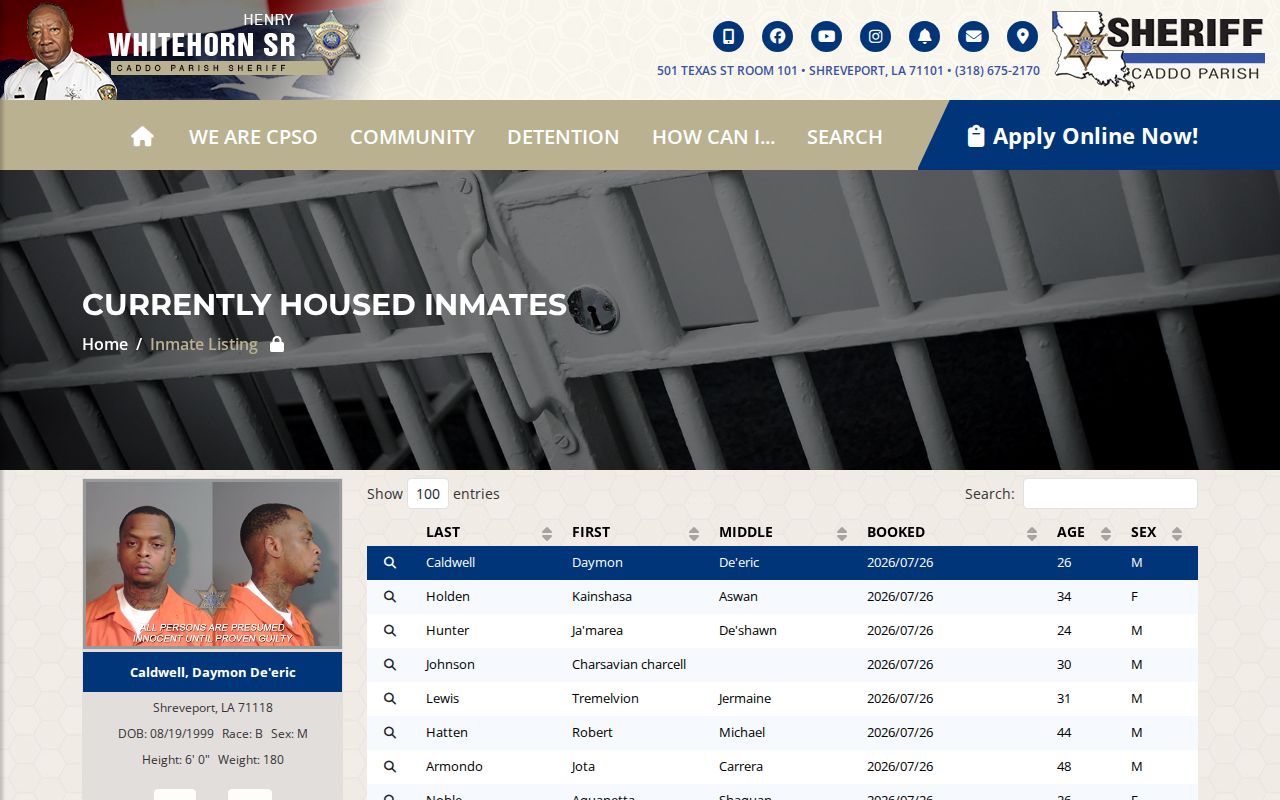
The captured official search illustrates the live custody route without republishing any arrestee's name or photograph. If no match appears, check spelling and timing, then call Caddo Correctional Center at 318-677-5254. A person may have been released, transferred, held elsewhere, or excluded because the matter is confidential.
CPSO also publishes a progressive web app with mobile-friendly links for locations, contacts, reporting a crime, patrol requests, commendations or complaints, and public-records requests. Treat it as a route into official sheriff services, not as proof of a separate inmate dataset. The current inmate page remains the documented public custody search, while the PWA can help a phone user reach the request channel when a roster result is incomplete.
Caddo Parish Arrest Lookups
No single database is a complete Caddo Parish arrest history. Use the channel that matches the question, then retain the booking number, event number, and case number as the record moves from agency to agency.
- Search custody and recent intake. Check the CPSO current-inmate page and booking report. If there is no match, call CCC and consider a later transfer to Louisiana custody.
- Request the arrest narrative. Contact the arresting agency named in the booking entry. CPSO, Shreveport Police, a town department, Troop G, or another agency keeps the report it created.
- Follow a filed charge. Use the Caddo Clerk docket or court-date channel, then request the case file for the charging instrument and disposition.
- Check state-level identity or custody. A person seeking their own statewide fingerprint-linked record uses LSP Right to Review. LA VINE or DPS&C serves sentenced custody and supervision questions.
- Submit a formal request. Use the CPSO online form, courthouse counter, or mail route when the public pages do not supply the report or releasable booking material.
City records remain city records. For a Shreveport event, use SPD Records; Vivian and Greenwood requests go to their municipal custodians. State-highway or state-investigation reports belong to Louisiana State Police Troop G. Federal records require the arresting agency's federal process, not a CPSO incident request.
Reading Caddo Recent Booking Reports
The CPSO recent booking report is organized around new intakes, while the inmate search focuses on present custody. Read the date navigation and booking time before drawing any conclusion. The charge shown is what entered the jail system at intake and may change after prosecutorial review.
The official booking-report view helps locate a recent event, but it is not a court result or a permanent parish-wide history. Entries can roll out of a recent list, and release can change the current roster. Save the booking identifier and check the court file after charges are filed.
Arrest Records: What They Contain
The public booking profile is a subset of the jail-management record. Internal medical, mental-health, precise housing, victim, and security data should not be assumed public. The arresting agency's report may add the event location, probable-cause narrative, officers, evidence, and warrant basis, subject to lawful redaction.
| Booking Number | A unique intake identifier, commonly formatted with a year and number, used to match custody records. |
|---|---|
| Booking Date & Time | When jail intake was recorded, which can differ from the arrest time in the agency report. |
| Arresting Agency | The office that made the arrest and normally holds the arrest narrative. |
| Charges | Allegations or holds entered at booking, not proof of guilt or necessarily the DA's filed counts. |
| Bond | The posted amount or type, or a hold; verify current status with the jail or court. |
| Booking Photo Policy | Displayed only when released through the official custodian or portal; it is not evidence of guilt. |
| Release Status | May show a release time, transfer, or current custody indicator and can change after display. |
Juvenile records are confidential under Louisiana law. Adult files can also contain protected victim data, personal identifiers, medical information, or active-investigation material. Ask for segregable public portions when only part of a report is exempt.
Caddo Correctional Center Intake Trail
The Caddo Correctional Center is at 1101 Forum Drive in Shreveport. During intake, staff confirm identity and warrants, inventory property, create fingerprints and a booking photograph, assign a booking number, enter charges and holds, and conduct medical and safety screening. Bond review or an initial court process follows based on the arrest and court schedule.
The facility page identifies the local custody source, not the agency that wrote every arrest report. Release can follow a lawful order, bond, sentence completion, or transfer. Do not impose a generic “48-hour arraignment” promise on a Caddo booking because timing varies with the arrest basis and court availability.
Recent Caddo Parish Bookings
CPSO's current-inmate and recent-booking views should be read together. One answers who is now shown in local custody. The other helps identify new intakes. A CPSO press release, when one exists, is a third source written around a selected event and is not a full booking log. Absence from any one view proves little about a person's full arrest history.
For sentenced state custody after transfer, use the DPS&C inmate-information route and LA VINE. LA VINE supports location, name, and ID or case-number searches and is reported to update every 24 hours. The DPS&C telephone locator at 225-383-4580 requires a DPS&C number or a name plus date of birth and may return the facility, contact details, and projected release date when calculated.
These state custody tools are not substitutes for the local arrest narrative. They become useful after a transfer or when the question concerns later confinement or supervision. For a fingerprint-linked account of one's own Louisiana arrest cycles, use State Police Right to Review instead. That identity-based product can reveal whether a local event reached the state repository and whether its court outcome was matched.
Note: Confirm current custody or release status directly before travel, payment, or other time-sensitive action.
Requesting Caddo Arrest Narratives
The CPSO public-records page routes requests for records that are not stored in a public database. The Records Division, administrative offices, and CCC may each hold different material. Weekday office hours are 8:30 a.m. to 5 p.m. The online contact fields include name, subject, email, optional phone numbers, message, and verification.
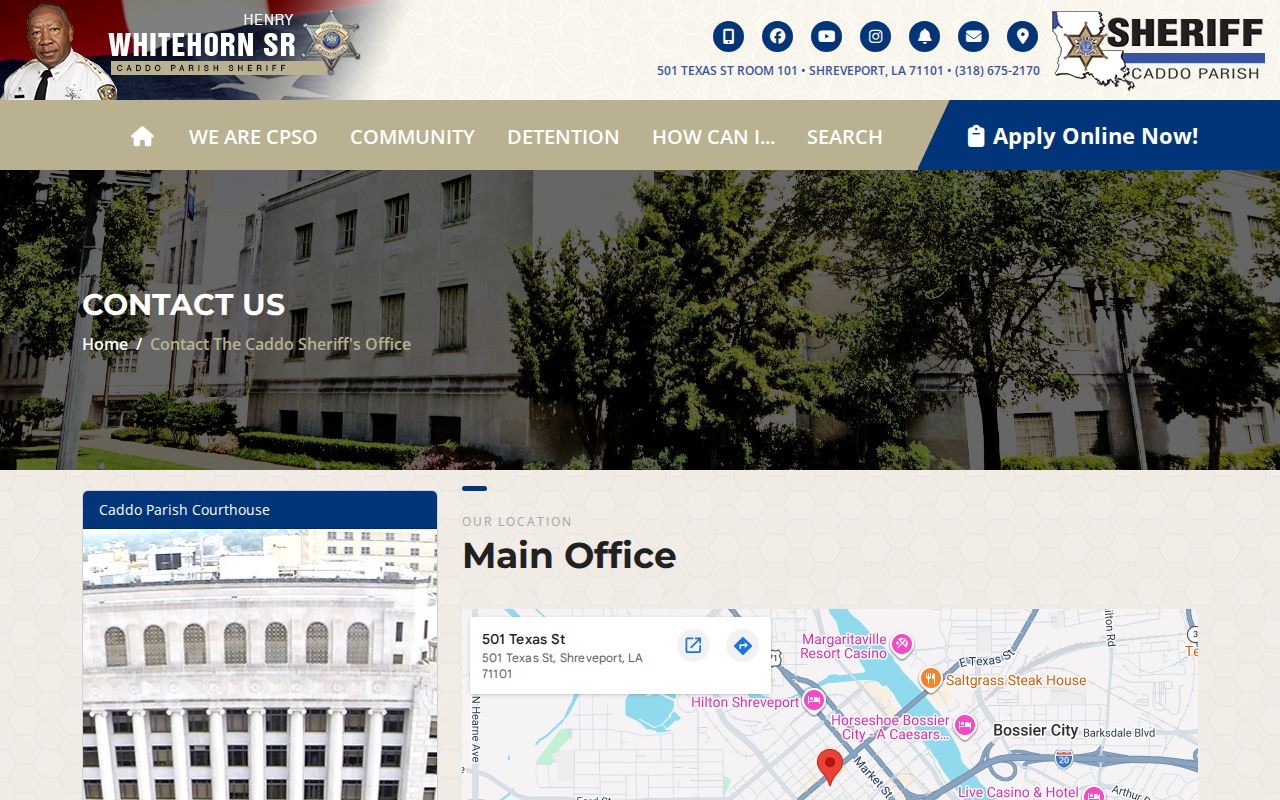
The official page also supports an in-person or mailed route. Address mail to Custodian of Records, Caddo Parish Sheriff's Office, 501 Texas Street, Room 101, Shreveport, LA 71101, and identify the responsible area. Describe the report number, event date, location, involved person, arresting unit, desired format, and whether inspection or certification is sought.
CPSO Records Division
501 Texas Street, Room 101
Shreveport, LA 71101
318-675-2170
Monday-Friday, 8:30 a.m.-5 p.m.
The model request letter is useful but not mandatory. Louisiana law requires a response within three business days when a record is not immediately available, not final production within that period. Ask for a written estimate or reason, and request the releasable portions if exemptions require redaction.
Caddo Arrest Warrant Records
The official CPSO warrant search can identify a public warrant lead by name. A warrant is a court command authorizing custody, while a warrantless arrest rests on a different probable-cause paper trail. Search results may lag a new, sealed, recalled, paid, or recently served warrant and should be confirmed by phone.
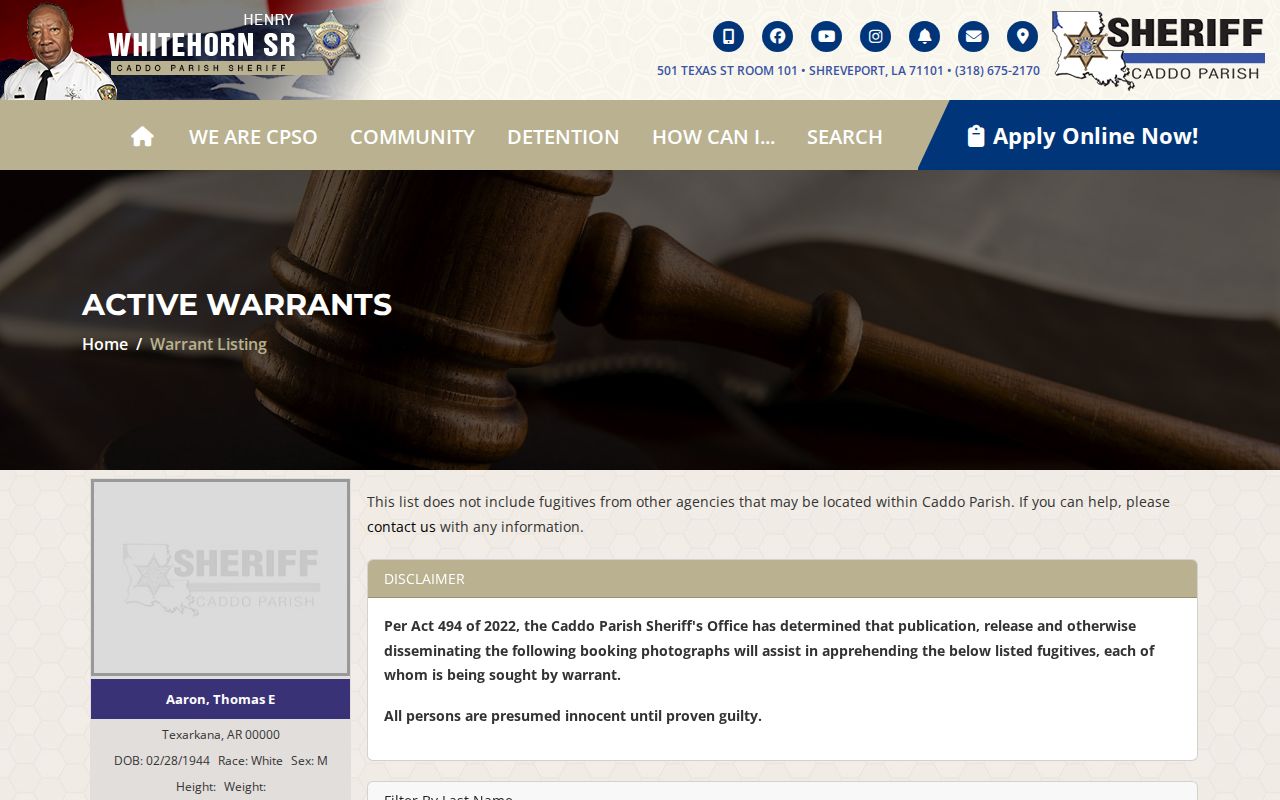
The official screen is a starting point, not a guarantee of current enforceability. Call the Warrants Division at 318-681-0670 during weekday business hours or CPSO at 318-675-2170 around the clock. First Judicial District bench warrants also appear in Clerk-held cases, while municipal warrants may require the issuing city court. Do not enter an office merely to test a match; legal advice may be needed to resolve it safely.
Arrest Records vs Conviction Records
A booking number begins the trail but does not finish it. The arresting officer records the alleged basis for custody. CCC records intake. The district attorney decides whether and what to charge, and the court records the result. The full Caddo Parish court case lookup is therefore the better route for a filed charge, plea, dismissal, verdict, sentence, or other disposition.
| Arrest Record | Conviction Record |
|---|---|
| Created by the arresting agency and booking facility | Created through the court and maintained by the Clerk |
| Shows that an arrest or booking occurred | Shows a judgment of guilt after plea or verdict |
| Lives with the agency and jail system | Lives in the court file and may report to LBCII |
| Can be followed by release, no charge, dismissal, or acquittal | Can lead to sentence, appeal, later relief, or lawful expungement |
A dismissed, no-billed, or acquitted event can remain in an arrest cycle until the disposition is reported and matched. For one's own record, obtain the certified court disposition and use Louisiana State Police Right to Review and challenge procedures. Expungement can remove qualifying information from public access but does not destroy the record.
Note: An arrest is not proof of guilt, and many bookings do not result in a conviction.