
Criminal Court Cases in Caddo Parish
The First Judicial District Court is the felony trial court for Caddo Parish and also handles parish-level criminal prosecutions. The Caddo Parish Clerk of Court receives indictments, bills of information, later pleadings, and motions. The Clerk issues subpoenas and bench warrants and keeps the official minutes. These records show what prosecutors filed and what the court did, which can differ from the allegations listed at booking.
Municipal courts are separate. Shreveport City Court and the municipal courts serving Vivian, Greenwood, and other towns handle city-code, traffic, and fine-level matters within their authority. A municipal search is not a complete First Judicial District Court check, and a parish search does not replace a city-court inquiry. The Caddo Clerk criminal division describes the parish file and its record services.
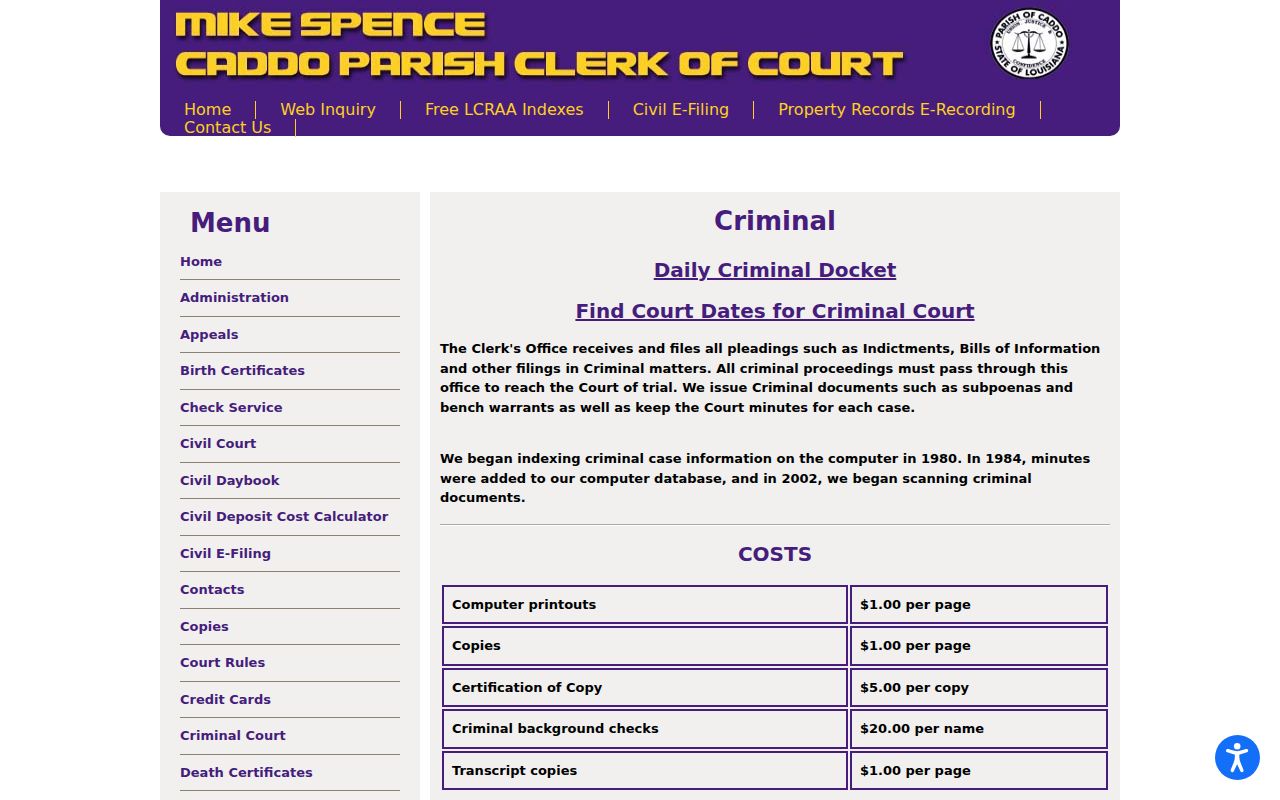
The Clerk is the source for copies and certification of First Judicial District Court criminal case records.
Caddo Parish DA Case Discovery
The Caddo Parish District Attorney provides an OnBase case and court-date discovery search. It accepts either a defendant surname or a docket number. The tool can help identify a matching prosecution and setting, but it does not replace the Clerk's official case file. Search results should be treated as leads, especially when names are common or a charge was amended after the first filing.
The official Caddo DA OnBase search is useful when the surname or docket number is known.
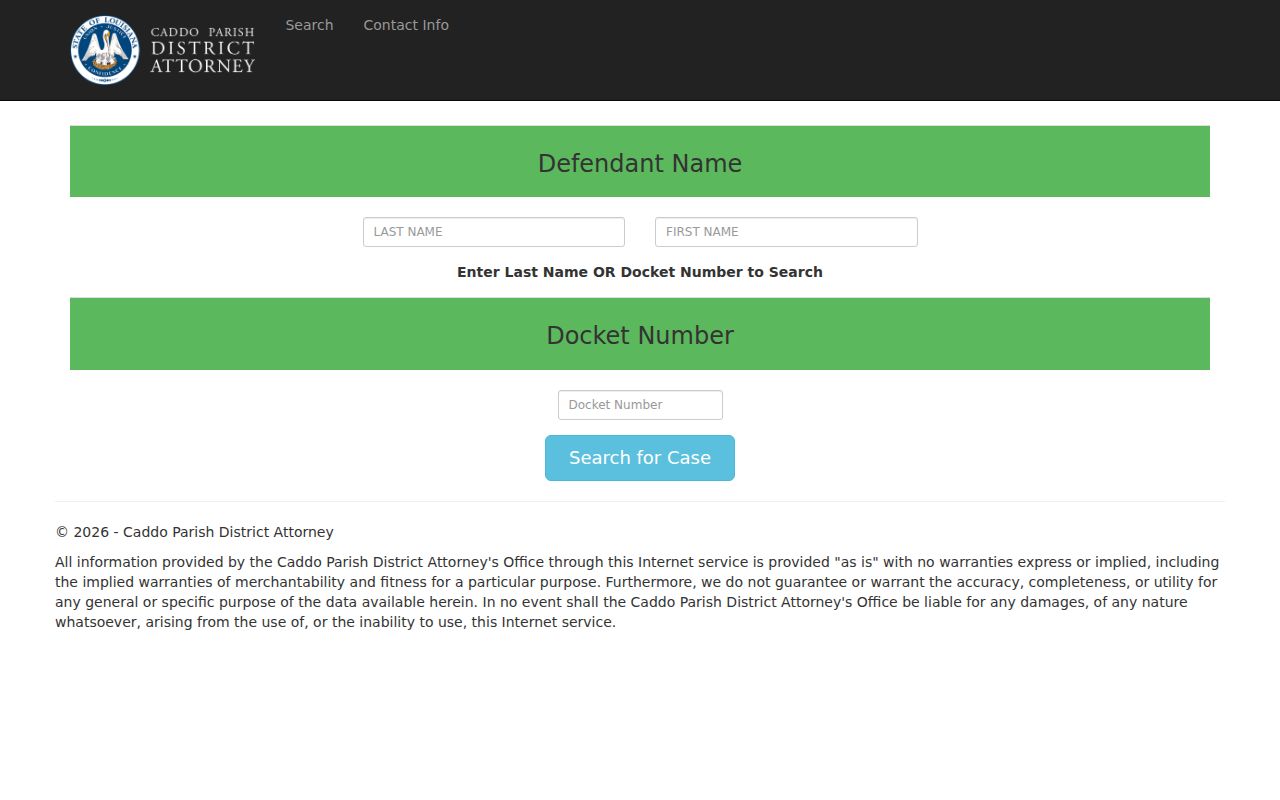
Once a match is found, record the docket information and ask the Clerk for minutes, filings, disposition, or a certified copy.
Note: A DA search result helps locate a prosecution, but only the Clerk certifies the First Judicial District Court record.
Caddo Parish Case Record Searches
Modern Caddo Parish court records can be approached through the Clerk's daily docket, the court-date tool, the DA discovery search, remote inquiry access, email, the courthouse counter, or a copy order. The best path depends on whether the reader needs a hearing date, an ordinary copy, a certified disposition, or an older file. Exact names, aliases, approximate year, and a docket number reduce false matches and manual search time.
- Choose the First Judicial District Court or the correct municipal court based on the charge and jurisdiction.
- Search the daily docket or DA tool by the available surname or docket number and note the court section.
- Compare the name, date, courtroom, judge, and section rather than relying on one matching name.
- Read the charging instrument and minutes together to learn whether counts changed and how the court ruled.
- Order the needed plain or certified copy from the Clerk, or request manual archive retrieval for older material.
The public tools expose different fields:
| Field Label | Type | Required | Notes |
|---|---|---|---|
| Defendant surname | Text | One OnBase route | Use exact spelling; confirm common-name matches against other details. |
| Docket number | Text | Alternate OnBase route | More precise when the full court number is known. |
| Docket date | Date/navigation | For schedule view | Moves through the Clerk's daily setting list. |
| Name, time, date | Result columns | Not applicable | Identifies a listed hearing, not the final result. |
| Courtroom, judge, section | Result columns | Not applicable | Shows where and before whom the setting is scheduled. |
Caddo Parish Daily Docket Limits
A daily docket row proves that a matter is listed for a setting. It gives the displayed defendant name, time, date, courtroom, judge, and First Judicial District criminal section. It does not prove guilt, show every document, or establish a disposition. Settings may change, and a scheduled event does not reveal whether a count was dismissed, reduced, resolved by plea, or tried.
The Caddo Parish daily criminal docket is the official schedule view.
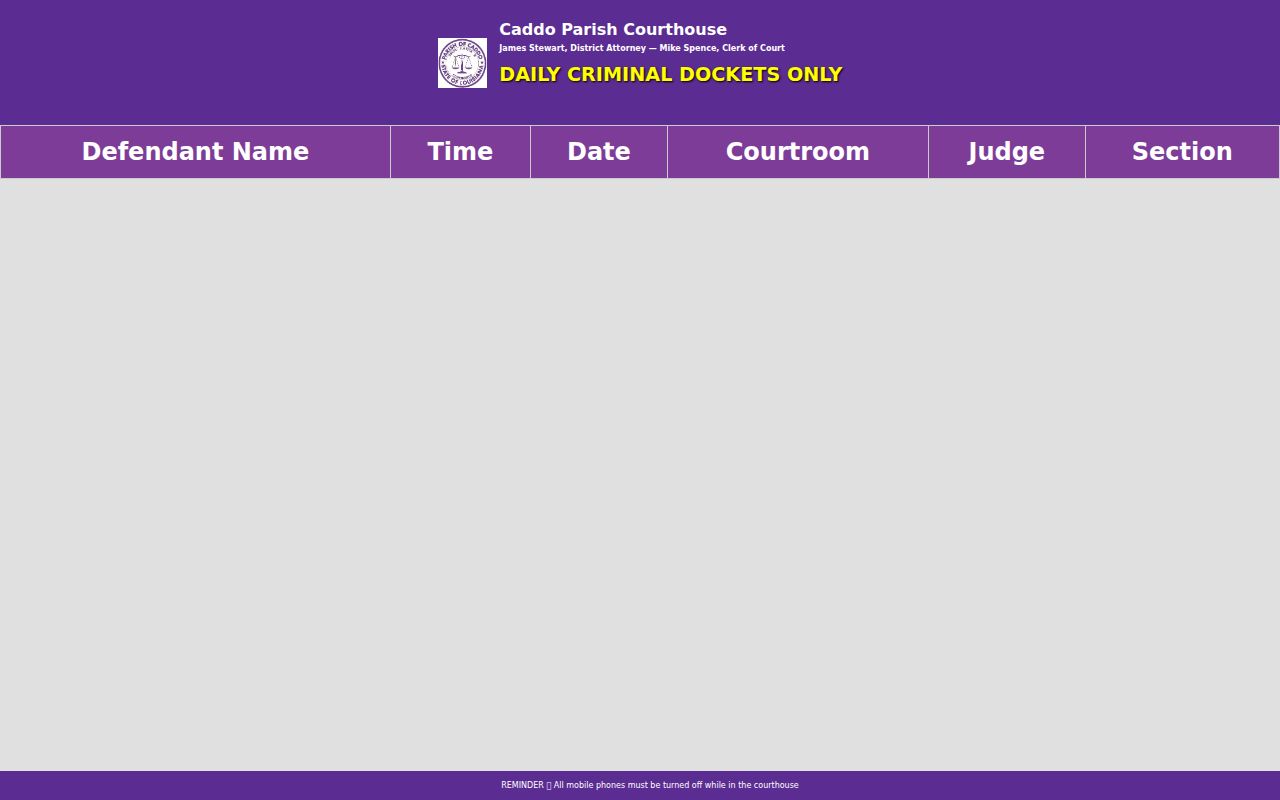
Use its court section and date to frame a focused Clerk request for the underlying minutes or filed documents.
What a Criminal Case File Contains
A Caddo Parish criminal case file tracks the prosecution as filed and decided. The charging instrument may be a bill of information submitted by the prosecutor or an indictment returned by a grand jury. Minutes are the Clerk's official summaries of courtroom action. Docket entries organize filings and events, while a disposition states how a charge ended. Read those sources together because the original allegation may be refused, amended, enhanced, reduced, replaced, dismissed, or resolved on a different count.
| Case Number & Court | Docket number, caption, filing date, court section, judge, and case status. |
|---|---|
| Charging Document | Bill of information or indictment, cited statute, count, grade, and later amendments. |
| Docket Entries | Filings, arraignment, pleas, motions, hearings, continuances, warrants, judgment, and sentence events. |
| Hearing Dates | Date, time, courtroom, judge, section, and available setting details. |
| Disposition & Judgment | Guilty, not guilty, dismissed, nolle prosequi, or other recorded outcome and date. |
| Sentence & Conditions | Confinement, suspended time, probation, fines, costs, or restitution where recorded. |
Victim, minor, sealed, and other protected information can be withheld or redacted. Public docket views also do not expose every available PDF.
Older Caddo Parish Court Records
The Caddo Clerk's indexed criminal cases date from 1980, minutes from 1984, and scanned document coverage begins in 2002. Those dates are not the same thing. A case may have an index entry without a full online image, and an older matter may require archive work or manual retrieval. Searchers should not treat a blank remote result as proof that no case exists.
The Clerk's remote inquiry coverage page explains the account-based access and available date ranges.
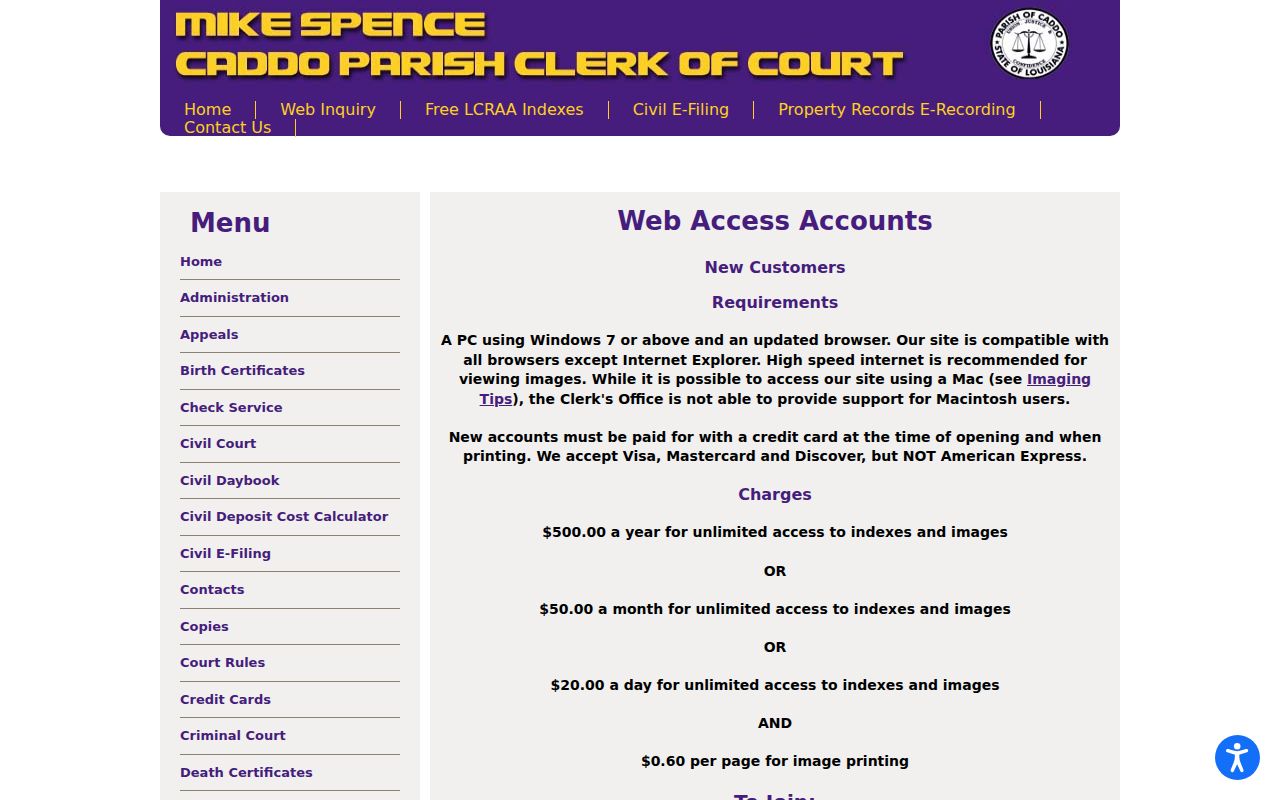
For a pre-index matter or a file without scans, email criminal@caddoclerk.com or visit the criminal division at 501 Texas Street in Shreveport. Give the exact name, aliases, approximate year, and docket number if known. Ask whether the Clerk can retrieve an image, paper file, minute, or disposition. Remote inquiry is an access tier, while the free court-date view serves the narrower task of finding a setting.
Criminal Case Stages in Caddo Parish
A prosecution begins when charges are formally filed by bill of information or indictment. At arraignment, the accused hears the charge and enters a plea. Pretrial work can include discovery, motions, hearings, negotiations, and continuances. The case then moves toward a plea or trial, a disposition, and sentencing when the outcome calls for it. The minutes provide the best concise record of what occurred at each court appearance.
Case flow: Charges Filed › Arraignment › Pretrial › Plea or Trial › Disposition › Sentencing
Not every case reaches every stage. A prosecutor may dismiss or enter nolle prosequi, which means ending prosecution of a count. An acquittal is a not-guilty adjudication. A bench warrant can appear in the minutes, often after a missed court setting, and its later recall should be verified with the issuing court rather than assumed from an old entry.
Caddo Parish Court Copies and Certification
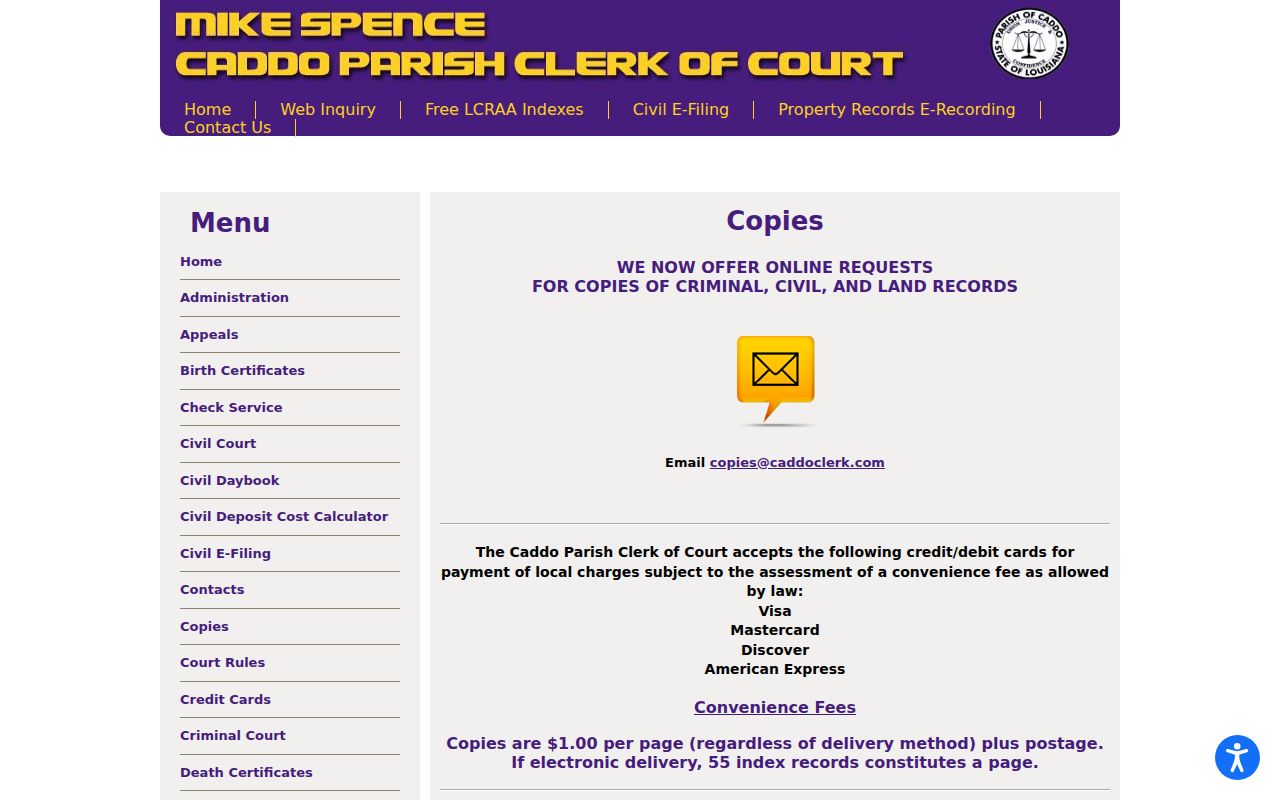
The Clerk charges $1 per page for a computer printout or ordinary copy, $5 for certification, $20 for a name-based Caddo criminal background check, and $1 per page for transcript copies. A certification attests that a copy comes from the Clerk's record. The $20 name check searches the Caddo criminal index; it is not a statewide Louisiana rap sheet and does not replace a request for the specific docket documents.
The Caddo Clerk copy-ordering page supplies the official ordering, delivery, and payment route.
Ask for the document that answers the question, such as the charging instrument, minute entry, disposition, judgment, or sentencing record. This keeps cost and review time focused. The courthouse counter and criminal division email remain useful when the desired item is unclear, cannot be ordered online, or requires manual retrieval.
Access Rules for Case Records
Caddo Parish court records are accessed through the Clerk's judicial channels, not by assuming that every filing is governed like an executive-agency request. Public access can include dockets, minutes, filed charges, dispositions, and available images, but sealing orders and laws protecting juvenile records, victims, minors, and sensitive identifiers limit what appears. An online view may contain less than the courthouse file, while both may lawfully omit protected material.
Key access rules: La. R.S. 44:31 establishes public-record access subject to exceptions, while C.Cr.P. art. 972 defines expungement as removal from public access rather than destruction.
If a Caddo Parish case does not appear, confirm the court, spelling, date range, and docket number. Then ask the Clerk whether the file is older, manually held, sealed, expunged, redacted, or indexed under another name. Expunged material is confidential under Article 973, with only specifically authorized access. A docket setting or filed charge alone never proves a conviction.
Caddo Parish Cases Outside First JDC
Some criminal matters tied to Caddo Parish never enter First Judicial District Court. City ordinance, traffic, and qualifying misdemeanor records can stay with Shreveport, Vivian, Greenwood, or another municipal court. Federal drug, firearms, fraud, civil-rights, interstate, and public-corruption prosecutions can proceed in the U.S. District Court for the Western District of Louisiana. Search the court that actually received the charge.
PACER is the official federal docket and document system after account registration.
PACER ordinarily charges $0.10 per page, caps many documents at 30 pages, and waives charges when quarterly use is $30 or less under current judiciary policy; verify terms at checkout. CourtListener and RECAP may hold contributed copies but do not replace the federal custodian. Federal custody is also separate from the Caddo jail and Louisiana prison systems. For local arrest-to-filing context, the Caddo Parish arrest search distinguishes booking allegations from charges filed in court.